

Topdon has developed the all-new TOPFIX—an interdisciplinary tool designed to make the entire Topdon product ecosystem “smart.
In the Beginning, There Was Google
Until now, diagnostic equipment manufacturers have focused primarily on providing tools with extensive diagnostic capabilities and expanded auxiliary functions (coding, programming, configurations). However, the limitation of this approach is that the success of complex operations often depends on the technician’s knowledge of the correct sequence of steps, adherence to preliminary conditions, and proper execution of final procedures. As a result, the diagnostic tool’s software may perform the requested function correctly, but the operation itself fails due to an incorrect execution sequence.
For specific markets (e.g., the VAG group), manufacturers have integrated all critical factory-specified procedures directly into the diagnostic tool. The tool itself “guides” the repair technician through the process, ensuring the successful completion of the requested operation. These are known as “guided functions”—a software package downloaded “on-demand” to the tester, effectively making it a counterpart to the original factory diagnostic system.
Unfortunately, this powerful approach is not available for all markets. External access to a search engine to retrieve information related to detected fault codes has been an acceptable, albeit temporary, solution given the vast amount of data available online. This refers to the classic “Related Searches” button found under each detected fault code description—an additional, low-cost aid, though not without risks associated with unverified information.
Why Artificial Intelligence Is the Best Solution
As mentioned in the introduction, a diagnostic equipment manufacturer has a global perspective and can easily access both publicly available official documentation from vehicle manufacturers, field diagnostic data, and relevant links where free solutions are unavailable. When harnessed to train a suitable AI engine, this vast amount of data can serve as the foundation for objective fault analysis and foster “shared experience”—a resource previously reliant on the expertise of colleagues familiar with similar vehicles.
In terms of repair efficiency, AI is the optimal solution: it can drastically reduce vehicle downtime, avoid unnecessary component replacements, and prevent unnecessary increases in repair costs.
What makes AI truly revolutionary is its ability to simplify the interpretation of results from instrumental analysis—not just from serial self-diagnostics. A prime example is thermal imaging: thermal camera recordings are crucial for non-invasive analysis of certain vehicle components, yet they require specialized expertise to interpret. For instance, thermal imaging can evaluate a catalytic converter, a clogged exhaust line, a radiator, an intercooler, or the operation of an EGR valve. The applications are numerous, but only with the support of an AI “helper” can these images be analyzed and classified to determine if a component is functioning correctly.
Against this backdrop, Topdon has developed an interdisciplinary product: the AI chatbot “TopFix.” Designed to support both enthusiasts with hobbyist tools and professionals requiring advanced support (including not just interpretation but also problem-solving procedures), TopFix integrates AI at multiple levels.

AI for Every Application
The core concept is to deliver tailored “intelligence” for every product and customer. TopFix AI operates at multiple levels, which we will explore below:
- Hobbyist and Personal Diagnostic Use
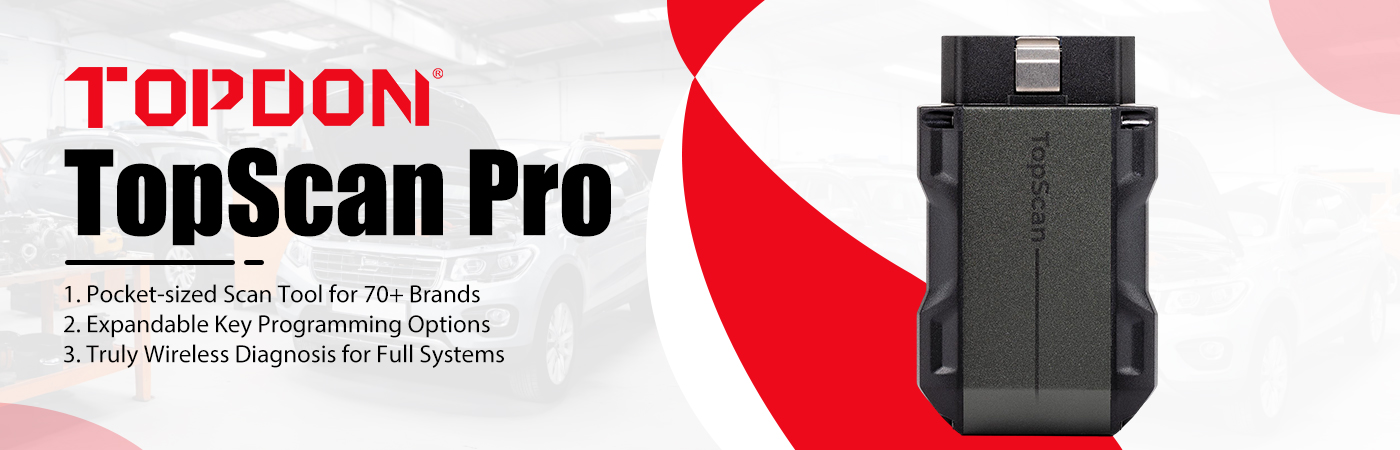
Topdon’s introduction of low-cost products based on a multi-protocol EOBD dongle (up to CAN-FD) and an Android application has revolutionized the hobbyist diagnostic sector. These tools provide enthusiasts with more advanced functions than standard EOBD diagnostics. However, their limitation lies in the user’s lack of basic technical knowledge. An AI chatbot enables accurate fault interpretation, facilitating preliminary problem assessment and ensuring users provide clear information to their trusted repair technicians.
- Professional Thermal Cameras
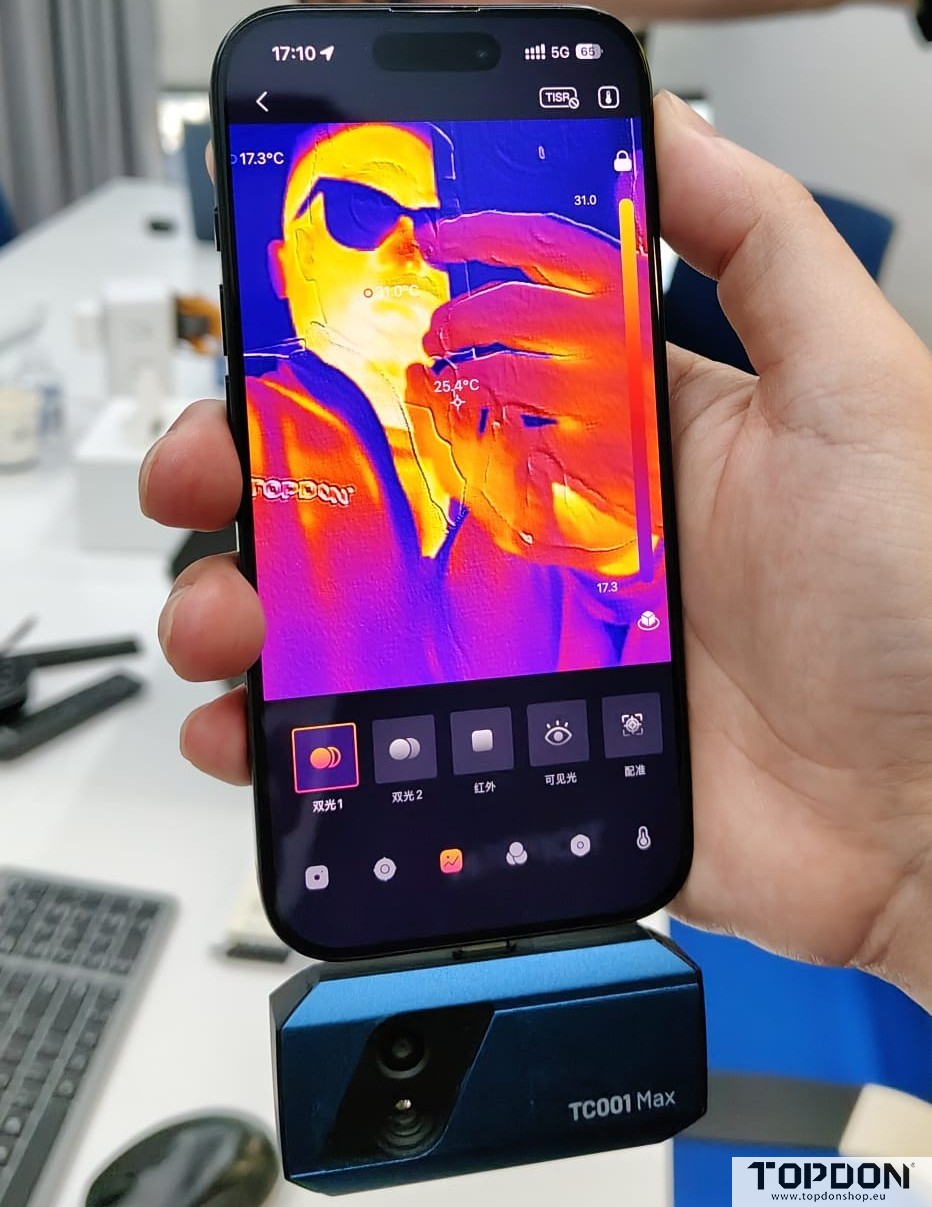
The ability to evaluate component status without prior disassembly is a key advantage for any technician. For example, replacing a diesel particulate filter (DPF) requires preliminary on-road diagnostics to assess differential pressure, but the issue may lie in the pre-catalytic converter rather than the filter itself. In this context, thermal analysis offers an innovative and powerful approach—though the challenge lies in distinguishing images of properly functioning components from those requiring intervention. An AI capable of categorizing vehicle types and their exhaust systems, identifying correct temperature profiles, and providing definitive assessments of component functionality is critical to reducing both repair time and costs.
- Professional Automotive Diagnostics
Automotive repair is perhaps the sector that stands to gain the most from AI assistance. For this reason, Topdon is focusing significant efforts on the version of TopFix designed for the next generation of professional Topdon testers. Like all AI systems, it will continuously “learn” over time, with capabilities improving through use and user “cooperation.” A key step will be establishing a two-way exchange between the manufacturer and users: fault statistics, parameters at the time of failure, and correlations between different DTCs (Diagnostic Trouble Codes) are just some of the data that will power the AI engine.
Multiple levels of assistance are available, increasingly complex and powerful:
- Level 1: Already available for TopScan hobbyist testers, it provides intelligent fault interpretation.
- Level 2: Analyzes the vehicle type and correlates the issue with all official technical service bulletins (TSBs) released by the manufacturer for that model. These official documents are not always utilized by repair technicians, but AI can analyze and assess their relevance to the detected fault. Topdon’s pilot for this level will launch with GM vehicles, followed by gradual expansion to other European and Asian markets.
- Level 3: Directly assists technicians throughout the entire workflow, not just fault detection. The automated system can support routine maintenance tasks by identifying necessary operations based on the vehicle and mileage, providing documentation on fluid quantities and procedures by accessing databases, and determining tester-compatible diagnostic operations.
Below are example screenshots of the TopFix App in operation (images are in English, referring to a developmental prototype from Topdon’s R&D department):


The integrated AI assistant can also function as a specialized search engine for automotive repair topics, providing general information on resolving faults for a specific vehicle model. This shifts from a model where knowledge is “reserved” for technical personnel to an innovative approach that helps new technicians acquire the necessary vehicle knowledge.
Conclusions
The integration of artificial intelligence into diagnostics has been long-awaited and, in many ways, inevitable. The need to train new generations of repair technicians, coupled with the growing complexity and connectivity of modern vehicles, will transform diagnostic testers into technical “encyclopedias” with increasingly automated functions.
As a full-spectrum diagnostic equipment manufacturer, Topdon has chosen to introduce an interdisciplinary platform that supports customers across all product categories—whether thermal analysis systems, DIY testers, or professional diagnostic stations. The TopFix AI assistant will always be on hand to simplify technicians’ work and deliver accurate answers in the shortest possible time.