



It’s a 2014 Honda Civic 1.8L, and both the ABS and Traction Control (VSA) warnings lit up on the cluster. Here we will share the troubleshooting and programming guide.
Tools used:
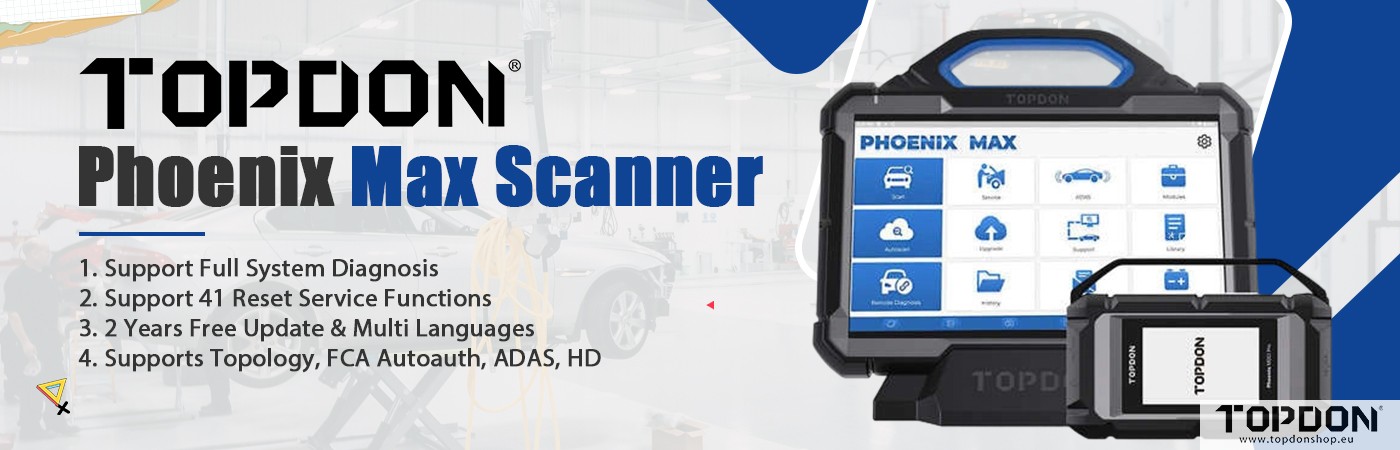
Topdon Phoenix Smart diagnostic scanner
Topdon RLink J2534 VCI
Honda iHDS software
Initial Scan
Hook up the Topdon Phoenix Smart to pull codes and look at the network layout on the system topology screen. The ABS module was lighting up the scan tool with three current faults.
121-11: VSA Solenoid Valve Malfunction
61-111: Modulator-Control Unit Power Source Circuit (IG) Low Voltage
65-111: Brake Fluid Level Switch Circuit Malfunction
The brake fluid level switch code 65-111 was strange to see, but when you see an internal solenoid hardware fault 121-11 pairing up with an ignition power supply circuit code 61-111, I went straight to power delivery.
First to check if the module is dropping voltage internally, or if the vehicle’s wiring harness is failing to deliver the supply voltage. If the harness delivers clean power and ground, the module is most likely failed.
Circuit Checks
Before calling an expensive part like an ABS modulator, I needed absolute verification. I went under the hood, located the ABS/VSA modulator assembly, and unclipped the main harness connector. This let me probe and load test the vehicle’s power and ground paths directly at the plug terminals.
I broke out my probe to check exactly what was happening under a simulated load.
Power Feed Test: Probing the main battery positive feed, my meter showed a solid 12.86V. This perfectly matched my static system reference of 12.84V, meaning there was zero excessive resistance on the supply side.
Ground Path Test: Checking the ground side pins showed a perfect 00.00V drop, confirming the ground circuit back to the chassis was clean and solid.
The Repair
With the diagnosis locked down, I did the mechanical work, unbolted the hydraulic lines, unclipped the harness, swapped out the failed unit, and dropped the new ABS modulator into place.
But with modern Hondas, swapping the part is only half the repair. The module has to be initialized to talk to the rest of the car. For the software side of the job, I grabbed my laptop and hooked up the Topdon RLink J2534 pass through to the DLC. I launched the factory Honda Diagnostic System (iHDS) software from the laptop menu, initiated the module replacement, and successfully programmed the new controller to the vehicle’s network.
The Two Step Bleed
Once the programming was finalized, I disconnected the laptop and broke back out the Topdon Phoenix Smart to handle the hydraulic system. Bleeding a new, completely dry ABS block requires more than just standard pedal pumping, air can get trapped inside the internal valve passages and won’t budge without forcing the solenoids to move.
Automated Modulator Bleed – I went into the Phoenix Smart and commanded the Modulator Bleed Function Test. The tool kicked on the ABS pump motor and cycled the internal VSA solenoids for the front left and right lines. This forces trapped air pockets out of the new valve block and pushes them down into the primary brake lines.
Manual Purge – Once the Smart completed the modulator bleed function, I followed up with a manual brake bleed at all four corners. This flushed out the remaining air bubbles that the module had just shoved down the lines, resulting in a firm pedal.
Road Test
With the system fully bled, I used the Smart to clear the codes across all modules. The Electronic Power Steering (EPS) code 85-01, which had popped up simply because it lost its data stream communication from the VSA module, cleared right out.
A final full system scan showed a completely green topology map with zero DTCs remaining in the ABS braking system or anywhere else on the network. I took the Civic out for a hard road test to cycle the brakes, activate the VSA system, and verify wheel speed. The brake pedal is firm, the vehicle stopped straight, and the dashboard stayed clear. Just another case proving that software is just as vital as wrenches.